

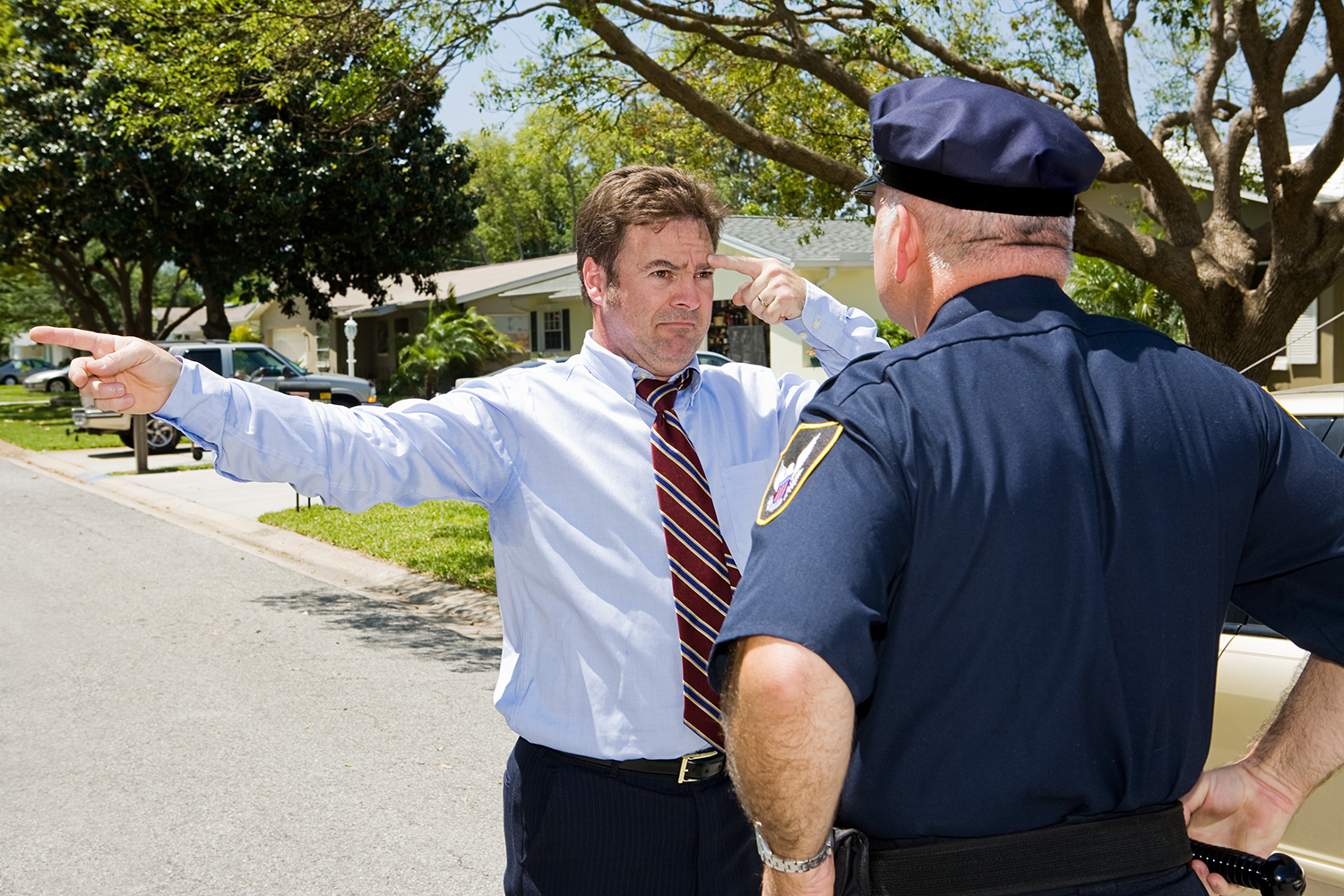
When a police officer suspects a driver may be impaired, the officer will often request a series of roadside exercises known as field sobriety tests. These exercises are commonly used in DUI investigations throughout Knoxville and East Tennessee.
The three standardized field sobriety tests are the Horizontal Gaze Nystagmus test, the Walk-and-Turn test, and the One-Leg Stand test. Officers use them to look for specific observations that may be described as clues of impairment. However, the results are not always as straightforward as a police report may suggest.
Road conditions, confusing instructions, medical conditions, injuries, footwear, anxiety, fatigue, and mistakes in administration or scoring may all affect a person’s performance. Field sobriety tests should therefore be evaluated in context, not treated as simple pass-or-fail examinations.
In this blog, we explain how each of the three standardized field sobriety tests are supposed to work, what clues officers look for, and what problems may affect the results. We also discuss why field sobriety tests are voluntary in Tennessee and how a DUI defense attorney may challenge the way they were administered, scored, or described.

Are Field Sobriety Tests Required in Tennessee?
No. Field sobriety tests are completely voluntary in Tennessee. A driver is not legally required to perform the HGN, Walk-and-Turn, One-Leg Stand, or other roadside coordination exercises.
Field sobriety tests are also separate from Tennessee’s implied-consent law. Tennessee Code Annotated § 55-10-406 addresses breath tests, blood tests, or both for determining the alcohol or drug content of a driver’s blood. It does not require drivers to participate in roadside field sobriety exercises. Refusing a requested breath or blood test may create separate licensing and legal consequences, so those chemical tests should not be confused with voluntary field sobriety tests.
Our DUI attorneys generally recommend politely declining field sobriety tests. Performing the exercises can give an officer additional observations to describe as evidence of impairment—even when balance problems, anxiety, injuries, or poor roadside conditions provide an innocent explanation.
Declining does not guarantee that the officer will end the investigation or allow the driver to leave. The officer may document the refusal and may still make an arrest based on driving behavior, odor, statements, appearance, or other observations. However, Tennessee law does not require a driver to help create additional evidence by performing voluntary roadside exercises.
1. Horizontal Gaze Nystagmus Test
The Horizontal Gaze Nystagmus test, or HGN test, is an eye-movement exercise used to look for possible signs of impairment. The officer asks the driver to follow a finger, pen, or light with their eyes while keeping their head still. As the stimulus moves from side to side, the officer watches for involuntary jerking known as nystagmus.
How Is the HGN Test Performed?
The officer generally holds the stimulus approximately 12 to 15 inches from the driver’s face and slightly above eye level. Before scoring the test, the officer should check for equal pupil size, resting nystagmus, and whether both eyes track together.
The officer then looks for three clues in each eye, for a maximum of six:
- Lack of smooth pursuit: The eye appears to jerk rather than follow the stimulus smoothly.
- Distinct and sustained nystagmus at maximum deviation: The eye continues jerking while looking as far to the side as reasonably possible.
- Onset of nystagmus before 45 degrees: Sustained jerking begins before the eye reaches an estimated 45-degree angle.
The stimulus must be moved at the proper speed and held in the correct position. Moving it too quickly, failing to hold it long enough, or inaccurately estimating the angle may affect the officer’s conclusions.
What Problems Can Affect an HGN Test?
Potential defense issues include whether the officer:
- Used the proper distance, height, speed, and timing
- Checked both eyes consistently
- Performed the preliminary eye checks
- Distinguished sustained nystagmus from slight movement
- Properly estimated the 45-degree angle
- Accounted for disclosed eye, neurological, or medical conditions
Flashing emergency lights, passing traffic, moving objects, and poor lighting may also interfere with the test. Certain drugs, medical conditions, injuries, and naturally occurring eye movement may provide explanations unrelated to alcohol.
The subtle eye movements involved may not be visible on body-camera footage. Video may still show whether the instructions, stimulus movement, timing, positioning, and testing environment were appropriate.
How Is HGN Evidence Treated in Tennessee?
Tennessee courts treat HGN differently from ordinary observations of balance or coordination. In State v. Murphy, the Tennessee Supreme Court classified HGN results as scientific evidence subject to Tennessee’s rules governing expert testimony.
The prosecution may therefore need to establish that the officer is qualified to offer HGN opinions and that the test was administered properly. Relevant issues may include the officer’s training, experience, proficiency, methodology, and ability to explain the basis for the conclusions offered.
2. Walk-and-Turn Test
The Walk-and-Turn test is a divided-attention exercise. It asks a driver to listen, remember instructions, maintain balance, count, walk in a specific manner, and perform a particular turn at the same time.
How Is the Walk-and-Turn Test Performed?
During the instruction stage, the driver is generally directed to stand with one foot immediately in front of the other, keep their arms at their sides, and remain in that position while the officer explains the exercise.
The driver is then instructed to take nine heel-to-toe steps along a line, turn using a series of small steps, and take nine heel-to-toe steps back.
The police officer looks for eight clues:
- Cannot maintain balance during instructions
- Starts before being told
- Stops while walking
- Misses heel-to-toe
- Steps off the line
- Uses arms for balance
- Makes an improper turn
- Takes the wrong number of steps
Scoring definitions matter. Walking slowly is not necessarily the same as stopping, ordinary arm movement is not automatically the use of arms for balance, and a mistake while counting aloud does not necessarily mean the driver took the wrong number of physical steps.
What Problems Can Affect the Walk-and-Turn Test?
A defense attorney may examine whether the officer:
- Gave and demonstrated the instructions correctly
- Told the driver not to begin early
- Provided sufficient room to complete the exercise
- Scored conduct that did not meet the recognized definitions
- Interrupted or distracted the driver
- Asked about injuries or balance problems
- Considered the driver’s footwear and the walking surface
Whenever possible, the exercise should be conducted on a reasonably dry, hard, level, nonslippery surface. A sloped shoulder, gravel, wet pavement, potholes, darkness, wind, traffic, or flashing lights may make the exercise more difficult.
Body camera footage may show the surface, the officer’s instructions, the driver’s actual steps, arm movement, alleged stops, and whether the written report accurately describes the performance.
3. One-Leg Stand Test
The One-Leg Stand is another divided-attention exercise. The driver is asked to balance on one foot while following instructions and counting aloud for approximately 30 seconds.
How Is the One-Leg Stand Test Performed?
The driver is generally instructed to:
- Stand with both feet together and arms at their sides.
- Raise one foot approximately six inches from the ground.
- Keep both legs straight.
- Look at the raised foot.
- Count aloud until told to stop.
- Keep their arms at their sides.
The police officer identifies four clues:
- Sways while balancing
- Uses arms for balance
- Hops during the test
- Puts the raised foot down
Slight or natural movement should not automatically be characterized as swaying. The officer should also distinguish between ordinary movement and actually using the arms to maintain balance.
What Problems Can Affect the One-Leg Stand Test?
Potential issues include whether the officer:
- Clearly explained and demonstrated the exercise
- Used the proper timing
- Scored slight movement as noticeable swaying
- Distracted or interrupted the driver
- Asked about injuries or disabilities
- Accounted for footwear and roadside conditions
- Gave the correct instructions after the foot touched the ground
The exercise places stress on the feet, ankles, knees, hips, and lower back. Arthritis, joint pain, balance disorders, neurological conditions, weakness, numbness, recent surgery, fatigue, or prior injuries may affect performance.
A sloped shoulder, loose gravel, wet pavement, potholes, strong wind, darkness, or nearby traffic may also make balancing more difficult. Video may show whether the officer’s reported clues are supported by what actually occurred.
Issues That Can Affect All Three Tests
Although each test uses different scoring criteria, several potential defense issues apply to the entire standardized battery.
Improper Administration or Scoring
Changing an instruction, skipping a demonstration, using incorrect timing, interrupting the driver, or counting behavior that is not a recognized clue may reduce the value of the results.
Medical and Physical Conditions
Eye conditions, neurological disorders, inner-ear problems, orthopedic injuries, arthritis, limited mobility, recent surgery, illness, fatigue, medication, or injuries from an accident may affect the eyes, balance, coordination, or ability to follow instructions.
Roadside Conditions
Field sobriety tests frequently occur beside moving traffic rather than in a quiet, controlled environment. Uneven surfaces, weather, darkness, emergency lights, noise, and passing vehicles may all affect performance.
Communication Problems
The exercises require a driver to remember multiple instructions and perform them in a particular order. Hearing difficulties, language barriers, unclear demonstrations, interruptions, anxiety, and inconsistent directions may cause mistakes unrelated to impairment.
Anxiety and Fatigue
A sober person may be nervous during a late-night roadside investigation involving flashing lights, traffic, and the possibility of arrest. Nervousness can cause shaking, confusion, rushed movements, or difficulty concentrating. Fatigue may also affect balance and divided attention.
Differences Between the Report and Video
An officer’s written report may emphasize alleged mistakes while omitting positive performance. Body camera or dash camera footage may show that the driver followed most instructions, counted correctly, maintained balance, spoke clearly, or quickly recovered from a minor mistake.
Video may also reveal incorrect instructions, unsuitable pavement, distractions, medical disclosures, or observations that do not satisfy the standardized scoring criteria.
Issues That Can Affect All Three Tests
Although each test uses different scoring criteria, several potential defense issues apply to the entire standardized battery.
Improper Administration or Scoring
Changing an instruction, skipping a demonstration, using incorrect timing, interrupting the driver, or counting behavior that is not a recognized clue may reduce the value of the results.
Medical and Physical Conditions
Eye conditions, neurological disorders, inner-ear problems, orthopedic injuries, arthritis, limited mobility, recent surgery, illness, fatigue, medication, or injuries from an accident may affect the eyes, balance, coordination, or ability to follow instructions.
Roadside Conditions
Field sobriety tests frequently occur beside moving traffic rather than in a quiet, controlled environment. Uneven surfaces, weather, darkness, emergency lights, noise, and passing vehicles may all affect performance.
Communication Problems
The exercises require a driver to remember multiple instructions and perform them in a particular order. Hearing difficulties, language barriers, unclear demonstrations, interruptions, anxiety, and inconsistent directions may cause mistakes unrelated to impairment.
Anxiety and Fatigue
A sober person may be nervous during a late-night roadside investigation involving flashing lights, traffic, and the possibility of arrest. Nervousness can cause shaking, confusion, rushed movements, or difficulty concentrating. Fatigue may also affect balance and divided attention.
Differences Between the Report and Video
An officer’s written report may emphasize alleged mistakes while omitting positive performance. Body camera or dash camera footage may show that the driver followed most instructions, counted correctly, maintained balance, spoke clearly, or quickly recovered from a minor mistake.
Video may also reveal incorrect instructions, unsuitable pavement, distractions, medical disclosures, or observations that do not satisfy the standardized scoring criteria.
Can Someone Perform Well and Still Be Arrested for DUI?
Yes. Field sobriety test performance is only one part of the probable cause analysis. An officer may also consider driving behavior, an accident, odor of alcohol, statements, appearance, speech, coordination, open containers, or other observations.
The Tennessee Supreme Court addressed this issue in State v. Bell. The driver had been traveling in the wrong direction on a divided highway, smelled of alcohol, and admitted drinking, but performed satisfactorily on roadside exercises. The Court held that the officer still had probable cause to make an arrest based on the circumstances as a whole.
Good performance can nevertheless help the defense. Video showing steady balance, accurate counting, clear speech, controlled movement, and the successful completion of detailed instructions may conflict with an officer’s claim that the driver appeared impaired.
An arrest also does not mean the tests proved guilt. Probable cause is a lower legal standard than proof beyond a reasonable doubt. Performing well does not guarantee that a driver will avoid arrest, just as performing poorly does not establish a DUI conviction.
Charged With DUI? Contact Barnes & Fersten Today
If you have been charged with DUI in Knoxville or anywhere in East Tennessee, do not assume that the officer’s description of the field sobriety tests proves the State’s case. These voluntary exercises are subjective, and their results may be influenced by conditions that have nothing to do with alcohol or drug impairment.
Barnes & Fersten takes the time to investigate what actually happened. Our attorneys can review the body camera footage, police report, chemical test evidence, testing location, officer training, and any physical or medical issues that may be relevant to your defense.
A prompt legal review can help you understand the charge, the evidence, and the defenses that may be available. Contact Barnes & Fersten today by calling 865-805-5703 or filling out our contact form to schedule a confidential consultation with an experienced Tennessee DUI defense attorney.

Attorney At Law, Managing Partner
Brandon D. Fersten is an esteemed Knoxville attorney practicing DUI, criminal defense, and juvenile law. Known for his empathetic approach and commitment to his clients, he brings a record of favorable case outcomes including dismissals and not guilty verdicts at jury trials resulting in Brandon being recognized as one of the “Top 40 Under 40” in Criminal Defense, U.S. News’ Best Lawyers: “Ones to Watch,” and Super Lawyers’ “Rising Stars”. Brandon’s professional accolades, combined with his passion for justice, position him as a reliable criminal defense advocate in the East Tennessee legal landscape, including Knox County, Blount County, Sevier County, Loudon County, Roane County, Anderson County, Cumberland County, Hamblen County, Monroe County, and McMinn County.
