
CDL DUI Defense Attorneys - Barnes & Fersten

Experienced DUI Defense Attorneys In Tennessee

Are You A CDL Holder Charged With DUI In TN?

Our attorneys can fight DUI charges across East Tennessee with a strategic, results-driven defense.

Your CDL Isn’t Just a License—It’s Your Livelihood

When you make your living behind the wheel, every mile matters—and so does every decision. For commercial drivers in Tennessee, a DUI charge can be devastating. Unlike other drivers, CDL holders face stricter rules and harsher penalties. Operating a commercial vehicle with a BAC of just 0.04%—half the legal limit for non-commercial drivers—can result in an automatic suspension of your commercial license.

And the law doesn’t stop there. Even if you’re driving your personal vehicle, a DUI arrest can trigger a CDL suspension, putting your career on the line before your case even goes to trial. A single mistake, misunderstanding, or faulty test result could cost you your job, your income, and your professional reputation.

At Barnes & Fersten, we understand what’s at stake. Our team has successfully defended CDL holders across East Tennessee, challenging questionable traffic stops, fighting unreliable breath or blood tests, and navigating the complex overlap between Tennessee DUI laws and federal CDL regulations. We don’t just aim to win your case—we fight to protect your career, your record, and your future. Because when your license is your livelihood, you can’t afford to leave your defense to chance.

DUI Laws in Tennessee: The Basics

Under Tennessee law, the State can prove DUI in two main ways: (1) by showing you were impaired by alcohol and/or drugs to the point your ability to drive safely was affected, or (2) by proving a per-se BAC of 0.08% or higher. Importantly, DUI covers not just driving on public roads—it also reaches being in physical control of a vehicle in areas “generally frequented by the public,” such as parking lots or apartment complexes. 

What a First DUI Conviction Can Mean

A first conviction carries a mandatory minimum of 48 consecutive hours in jail (up to 11 months, 29 days). If the BAC is 0.15% or higher, Tennessee law increases the minimum to 7 consecutive days. Courts can also impose fines, probation, alcohol/drug assessment and treatment, monitoring or interlock requirements, and other conditions. These penalties can escalate with aggravating factors or prior convictions.

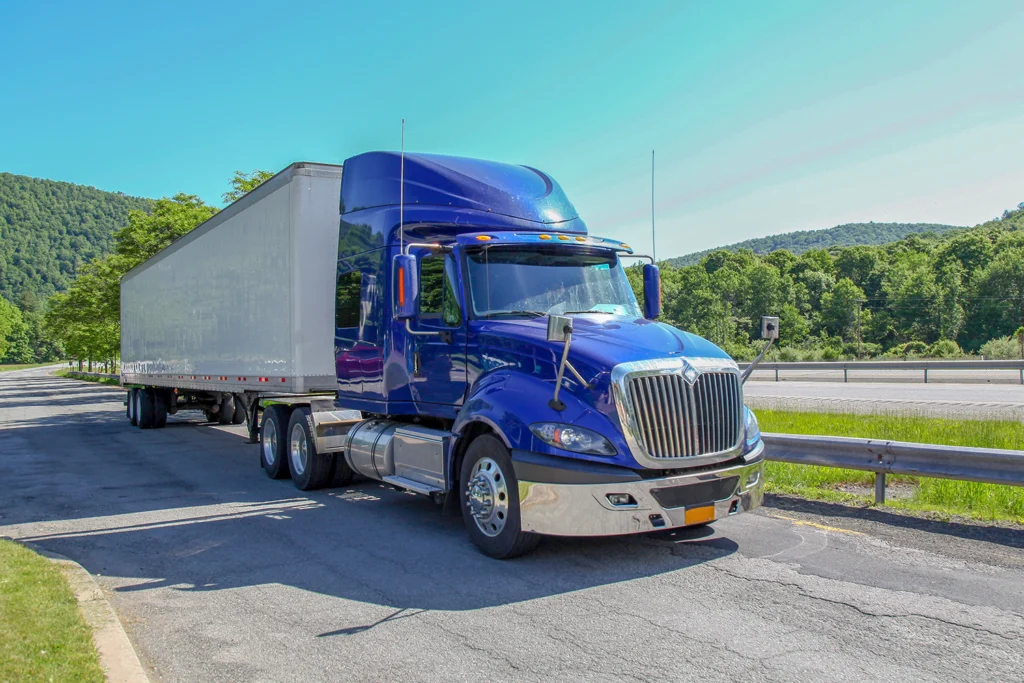
Semi truck on the road

🔎 CDL Specific DUI Rules in Tennessee

As stated earlier, when a commercial driver is operating a commercial motor vehicle (CMV), Tennessee’s DUI statute sets a lower per-se limit of 0.04% BAC—half the standard for non-commercial driving. That means a BAC reading that might not be a per-se DUI for a regular driver can still be a per-se violation for a CDL holder behind the wheel of a CMV. 

CDL Disqualification Periods 

Beyond the criminal court case, CDL holders face administrative disqualification under federal rules that Tennessee enforces. For “major offenses,” the federal table provides: 1-year disqualification for a first offense (3 years if the CMV was transporting hazardous materials), and lifetime disqualification for a second major offense—with possible reinstatement after 10 years if the State approves and rehabilitation conditions are met. Major offenses include DUI under state law, refusal under implied consent, and having 0.04%+ BAC while operating a CMV. Tennessee’s CDL statute adopts this federal scheme. 

A DUI in Your Personal Vehicle Hits Your CDL

In most DUI cases, CDL holders are charged while driving their personal vehicle. Federal rules make clear that CDL disqualification can result from violations in any vehicle. A DUI conviction while driving your personal car still counts as a major offense and typically produces a 1-year CDL disqualification on a first offense (3 years if the underlying violation was 0.04%+ in a hazmat CMV; lifetime for a second major offense). This “any vehicle” principle is spelled out in the federal disqualification table and incorporated by Tennessee law. 

No “Hardship” or Conditional CDL During Disqualification

Once disqualified, a CDL/CLP holder may not operate a CMV in any capacity—and an employer may not permit it. In other words, there’s no such thing as a hardship or occupational CDL that lets you keep driving commercially during a federal disqualification. (A court-ordered restricted non-commercial license may sometimes be available for ordinary driving, but not for CMV operation.) Federal anti-masking rules also prohibit courts from using diversion or similar devices to hide disqualifying convictions from CDLIS. 

How a CDL DUI Affects Your Career

Employer Notification Requirements

Under Federal Motor Carrier Safety Administration (FMCSA) regulations, CDL holders must notify their employer within 30 days of any DUI conviction, even if it happened in a personal vehicle. Failing to report can result in additional penalties, including termination. Many employers also require immediate notification of an arrest, not just a conviction.

FMCSA Reporting and National Driver Records

When a CDL DUI occurs, the violation is reported to the Commercial Driver’s License Information System (CDLIS) and your state driving record. This means any prospective employer can see it during a background check—whether you apply for a local delivery job or a long-haul trucking position.

Immediate Job Loss Is Common

Most trucking companies have strict “no DUI” policies. A first-offense DUI can lead to immediate termination, and your CDL disqualification means you legally cannot drive a commercial vehicle until your suspension period ends. This loss of income often starts the same week as the arrest.

Difficulty Finding Future Employment

A CDL DUI stays on your record for life in the CDLIS system and will remain visible to carriers and insurers. Even after your license is reinstated, many employers will refuse to hire drivers with a DUI, and those that do may offer only lower-paying or probationary roles.

Insurance Rate Increases and Job Restrictions

DUI convictions drive up insurance costs for trucking companies, and many insurers refuse to cover drivers with a DUI on their record. This can force drivers into short-term contracts, lower-paying hauls, or non-driving positions within the industry.

Why Choose Barnes & Fersten As Your CDL DUI Defense Attorneys?

We Understand What’s At Stake

We understand that your CDL license isn’t just plastic in your wallet—it’s your livelihood. We focus on protecting both your record and your ability to work in the trucking, delivery, or commercial driving industry.

East Tennessee’s Most Trusted DUI Defense Team

Click here to read what clients are saying on Google!

With over 275 5-star reviews, our firm is known for prioritizing client experience and delivering real results. We don’t just fight criminal charges—we guide you through every step, ensuring clear communication and a personalized defense strategy tailored to your unique situation.

Proven Local Experience

We routinely defend CDL holders in Knoxville and throughout East Tennessee, and we know the local courts, prosecutors, and procedures that can make a difference in your case.

Frequently Asked Questions

Yes. Under 49 C.F.R. § 383.51, a DUI is a “major offense” whether it happened in a CMV or a personal vehicle, triggering a 1-year CDL disqualification for a first offense (3 years if hauling hazmat) and lifetime for a second.

Yes. CDL holders must notify their employer within 30 days of any traffic-control conviction (in any vehicle). And if your license is suspended, revoked, canceled, or you’re disqualified, you must notify your employer by the end of the next business day.

Yes. States share CDL data through CDLIS, and federal rules require states to impose disqualifications and record them electronically; employers also must not let a disqualified driver operate a CMV.

No. A DUI conviction in Tennessee is not expungeable; only non-convictions (dismissed, not-guilty, nolle prosequi) or certain reduced charges may qualify for expungement.

Often yes, if your standard license is valid or you obtain a court-approved restricted non-commercial license with ignition interlock (when eligible). But you cannot operate a CMV during the CDL disqualification.

Sometimes. Avoiding a DUI/refusal “major offense” can prevent automatic CDL disqualification—but federal anti-masking rules bar courts from using diversion or similar tactics to hide qualifying convictions. Any reduction must be legitimate and accurately reported to CDLIS.

How Our Attorneys Defend CDL DUI Charges in Tennessee

When your CDL is on the line, the defense you choose can be the difference between keeping your career or losing it for good. At Barnes & Fersten, we treat CDL DUI cases as more than criminal matters — they’re professional emergencies that demand precision, speed, and a strategy tailored to both Tennessee DUI law and federal CDL regulations. Here’s how we build that defense:

Challenging the Legality of the Traffic Stop

If the stop wasn’t lawful, the prosecution’s case may fall apart. We look closely at the officer’s stated reason for pulling you over. Was there truly reasonable suspicion of impaired driving, or were you stopped for something that’s common in commercial vehicle operation—such as wide turns, lane shifts to avoid hazards, or minor speed fluctuations on grades?

We obtain dashcam and bodycam footage, dispatch records, and even weather and road condition reports to challenge the State’s narrative from the very start.

Scrutinizing Field Sobriety Tests

Field sobriety tests are subjective and heavily influenced by the officer’s perception. We dig into whether the officer followed NHTSA-approved protocols for tests like the Horizontal Gaze Nystagmus, Walk-and-Turn, and One-Leg Stand. We also consider whether the testing location was level, well-lit, and safe — something roadside testing often fails to provide.

For CDL drivers, fatigue, heavy work boots, or even uneven pavement at a weigh station can create “clues” that have nothing to do with alcohol or drugs. We make sure the court sees the difference.

Investigating BAC Testing Procedures

A BAC reading just over 0.04% in a commercial vehicle can disqualify your CDL, so accuracy is critical. We review breathalyzer calibration logs, operator certifications, and whether the legally required observation period was properly followed. For blood tests, we examine chain of custody, storage conditions, and lab methods—including whether the sample was whole blood or serum, which can produce inflated results if not adjusted correctly.

Even small testing errors can be enough to create reasonable doubt or get results excluded from evidence.

We Examine Implied Consent and Refusal Issues

Refusing a test can be just as damaging as failing one—and starting in 2026, the penalties will be even harsher, with longer revocations and no “warrant loophole.” We review whether you were correctly advised of the consequences, whether the request for testing was lawful, and whether there were communication or medical issues that affected your ability to comply. If the implied consent warning was flawed or the officer skipped steps, we may be able to get the refusal dismissed or limit its impact on your CDL.

We Negotiate With Your CDL in Mind

If dismissal isn’t possible, our next priority is preventing a conviction that counts as a “major offense” under FMCSA rules. That might mean negotiating for a reduced charge or alternate resolution that avoids automatic CDL disqualification. We focus on long-term impact—because for a professional driver, keeping your CDL often matters more than any fine or short jail sentence.

Take Charge Of Your Defense – Contact Us Today!

A CDL DUI charge isn’t just a legal problem—it’s a direct threat to your career, your income, and your reputation. Every day that passes can mean lost evidence and fewer options for protecting your license. Our DUI defense attorneys will act fast to challenge the stop, fight the charges, and safeguard your livelihood.

Whether you’re facing DUI charges in Knox County, Blount County, Sevier County, Loudon County, or anywhere in East Tennessee, we have the experience, local knowledge, and strategic approach needed to secure the best possible outcome for you. 

📞 Call 865-805-5703 today to get started.
📝 Or complete the form below to schedule your FREE consultation.